 layrd.liveLayer by Layer
Kinetic Theory of Gases and Gas Laws
Nine connected videos that build the chapter layer by layer, in teaching order. Each part has a companion page with the key results, worked examples, common mistakes and practice questions. The formula sheet and the mixed practice set cover the whole chapter.
Learning path · Formula sheet · Practice set
Print and revise: Revision sheet (PDF) · Formula sheet (PDF, one page)
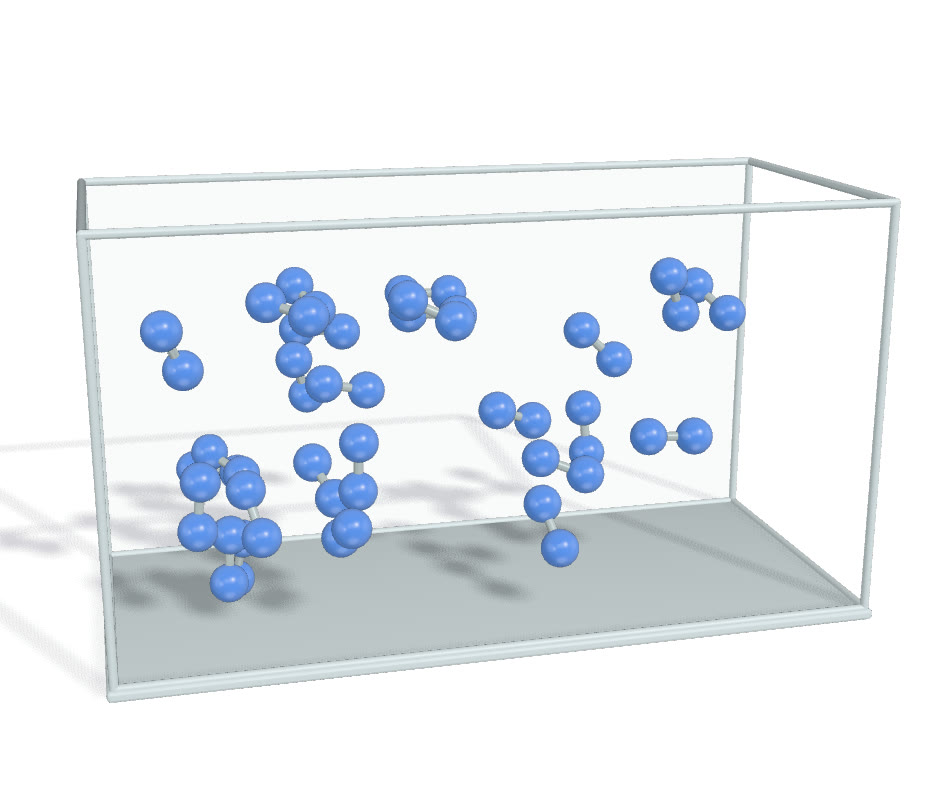
Postulates of Kinetic Theory
State the ideal-gas model and explain why real gases approach it at high T and low P.
Basic postulates of an ideal gas · When real gases behave ideally
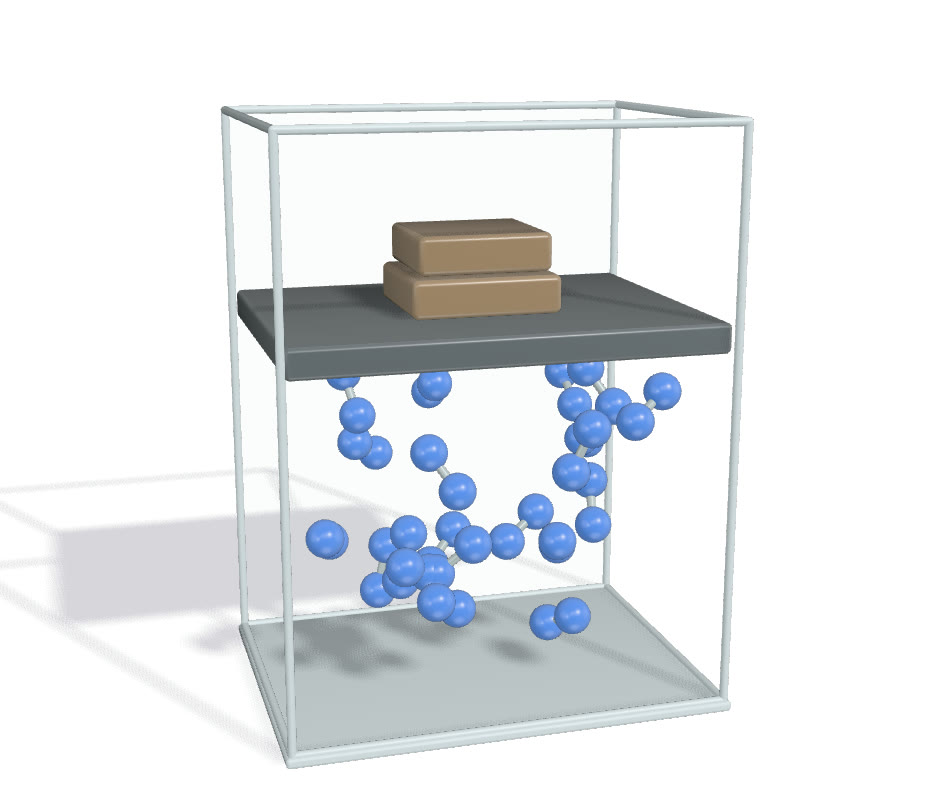
Gas Laws
Use the ideal gas equation in all its forms, plus Boyle, Charles and Dalton, to solve state-change and mixture problems.
Boyle's law · Charles and Gay-Lussac's law · Ideal gas equation · Avogadro's number and hypothesis · Dalton's law of partial pressures
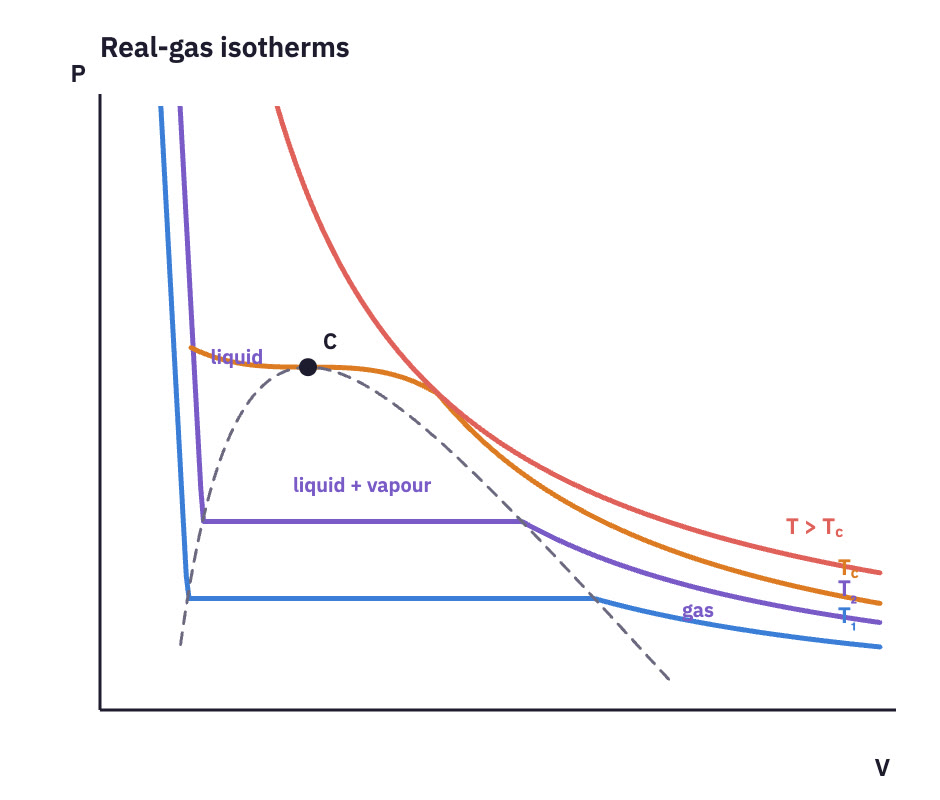
Real Gases, Change of Phase and van der Waals Equation
Read real-gas P–V isotherms, define critical temperature, and apply the van der Waals corrections.
Real-gas isotherms and liquefaction · Critical point and critical temperature · van der Waals gas equation
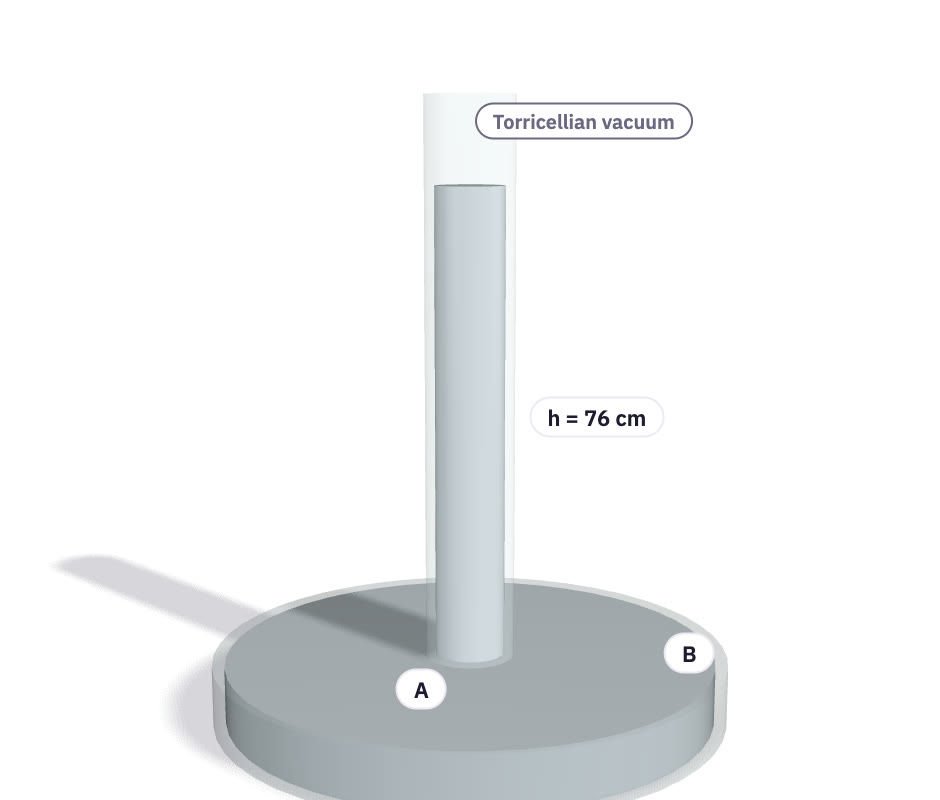
Pressure of Air and Barometric Relation
Explain the barometer and find how pressure varies with height or in rotating frames for an isothermal gas.
Torricellian barometer · Barometric relation
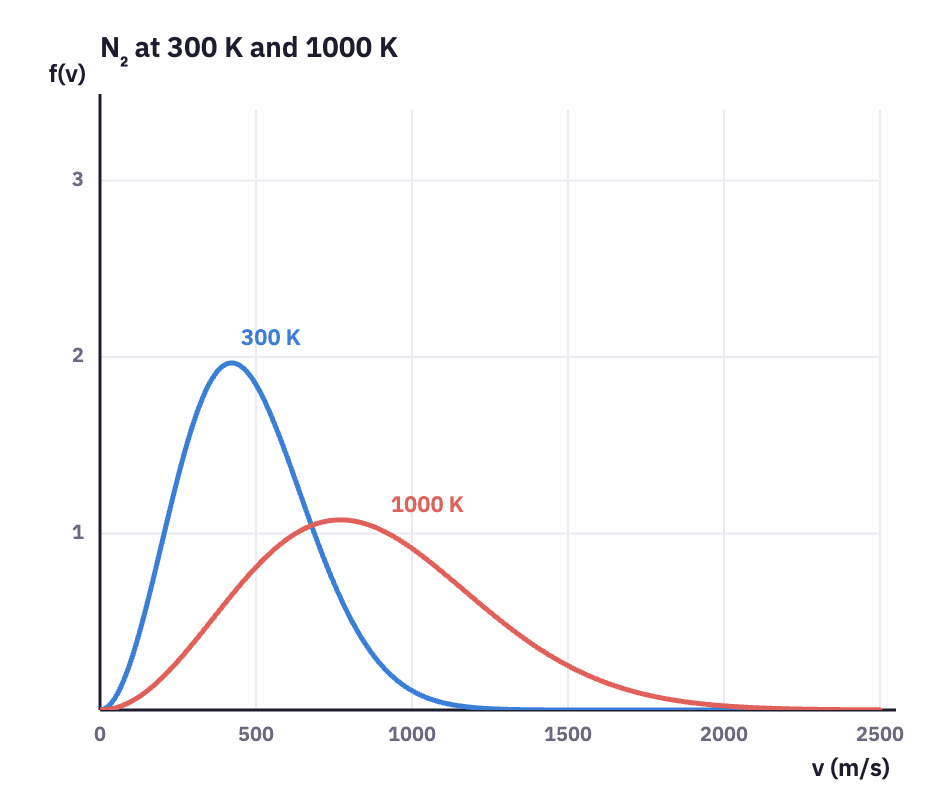
Distribution of Molecular Speeds
Interpret the Maxwell–Boltzmann distribution and compute rms, mean and most probable speeds.
Maxwell–Boltzmann distribution · Average velocity, rms, mean and most probable speed
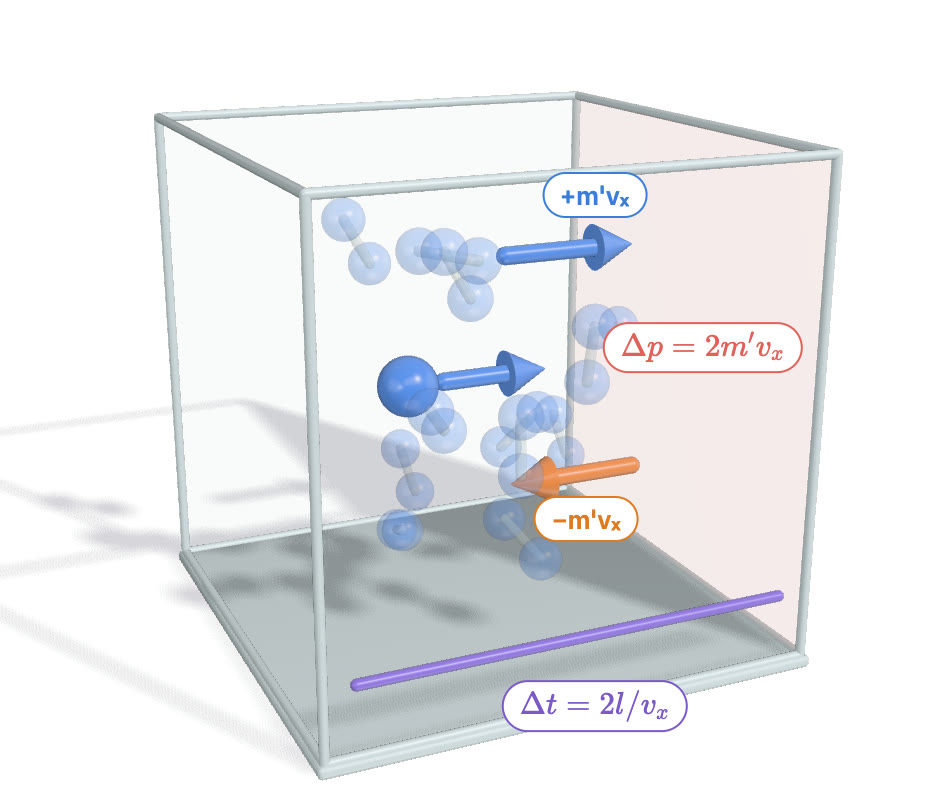
Pressure, Kinetic Energy and Temperature
Derive the kinetic-theory pressure formula and link molecular kinetic energy to absolute temperature.
Pressure exerted by a gas · Kinetic energy of gas molecules · Microscopic interpretation of temperature
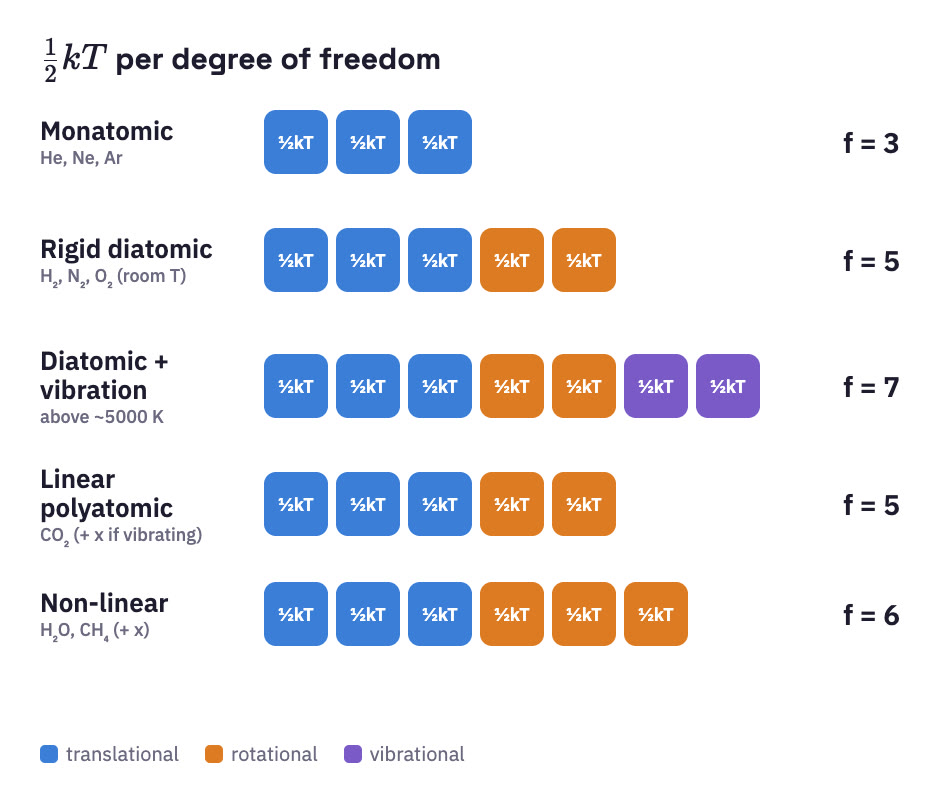
Degrees of Freedom and Equipartition of Energy
Count degrees of freedom for different molecules and apply equipartition to find energy.
Translational degrees of freedom · Law of equipartition of energy · Monatomic, diatomic and polyatomic molecules
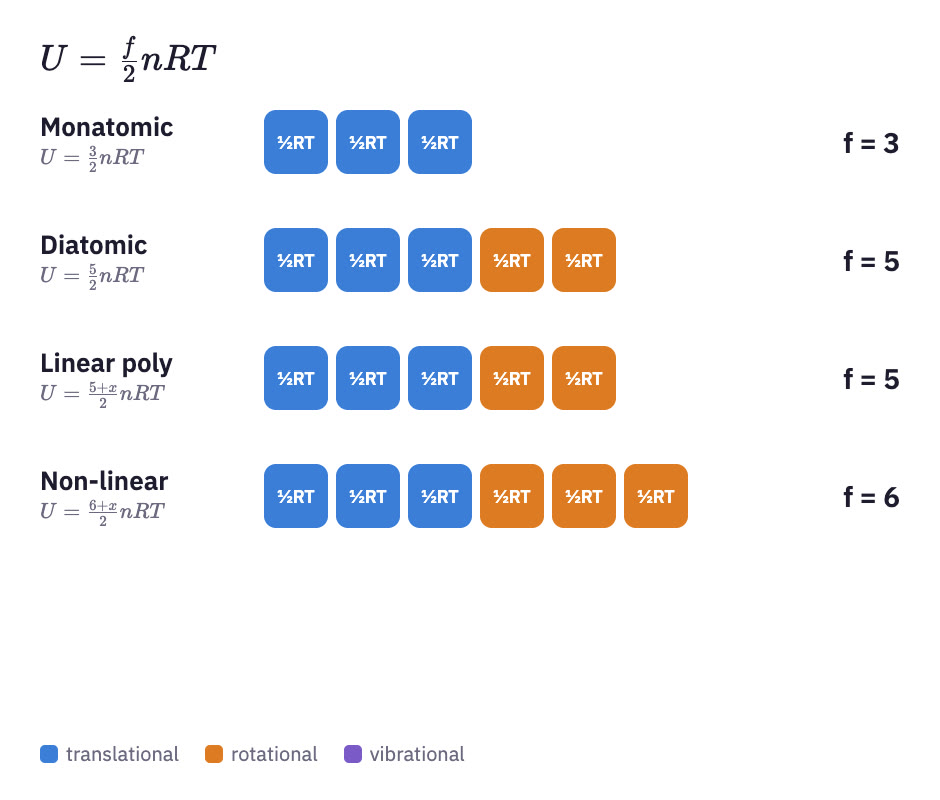
Internal Energy of a Gas
Compute internal energy of single gases and mixtures, including mixing at constant volume.
Internal energy of an ideal gas · Equivalent degrees of freedom for a mixture · Mixing of gases at constant volume
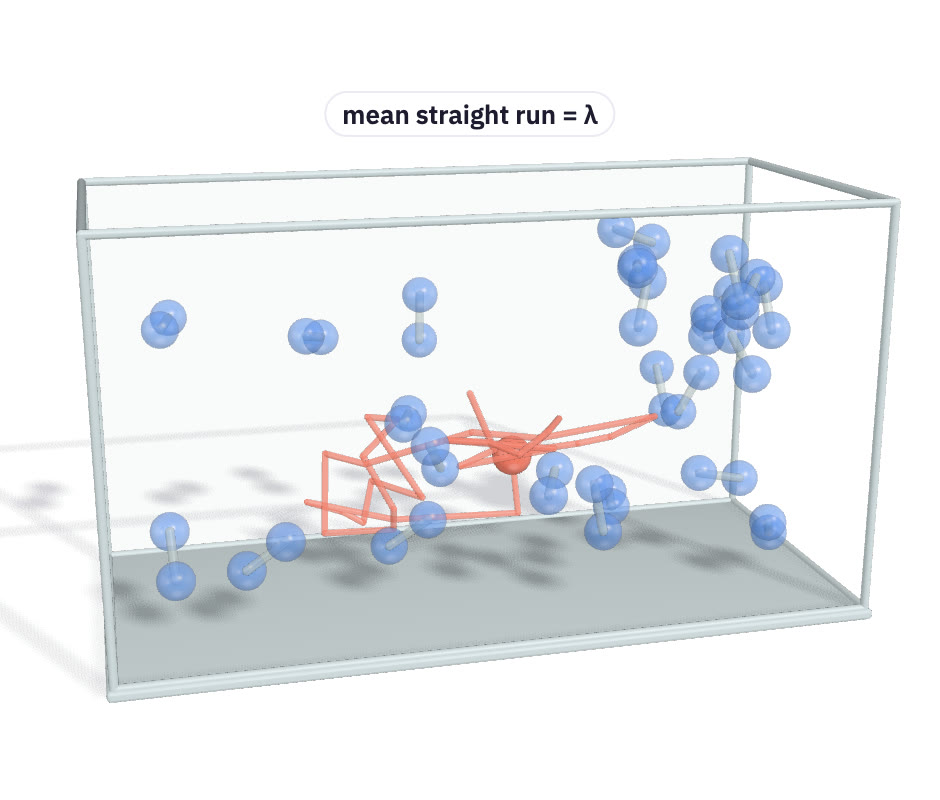
Mean Free Path and Diffusion
Explain why gases spread slowly despite fast molecules, and use the mean free path and Fick's law.
Mean free path · Diffusion and Fick's law