 layrd.liveLayer by Layer
- 1. Isomer Basics
- 2. Functional
- 3. Metamerism
- 4. Keto-Enol
- 5. Other Tautomers
- 6. D.B.E. & Counting
- 7. Geometrical
- 8. Chirality
- 9. No Chiral Carbon
- 10. Counting Stereoisomers
- 11. Racemates & ee
- 12. Fischer & D/L
- 13. Alkane Conformations
- 14. Cyclohexane
Functional Isomerism
Functional isomers share a formula but have different functional groups, so they behave differently. The key skill is knowing which groups share a general formula.
Builds on: Part 1 · Isomers: Chain, Position and Ring-Chain.
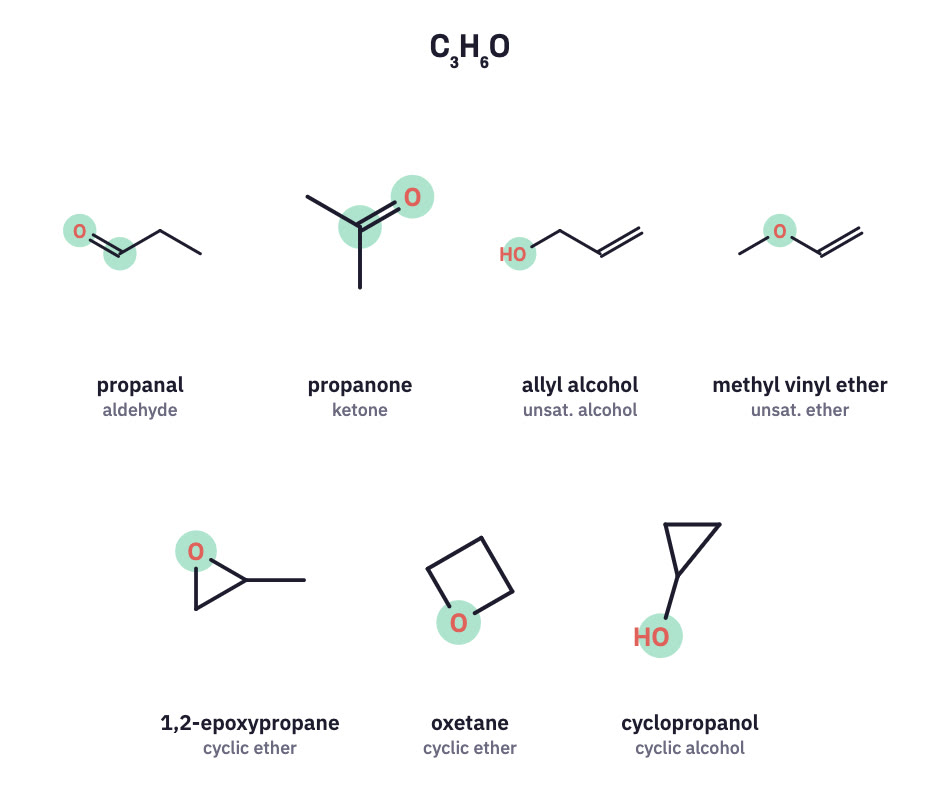
Seven isomers of C₃H₆O
One C=O, one C=C or one ring: propanal, propanone, allyl alcohol, methyl vinyl ether, 1,2-epoxypropane, oxetane and cyclopropanol. Don't stop at the aldehyde and ketone.
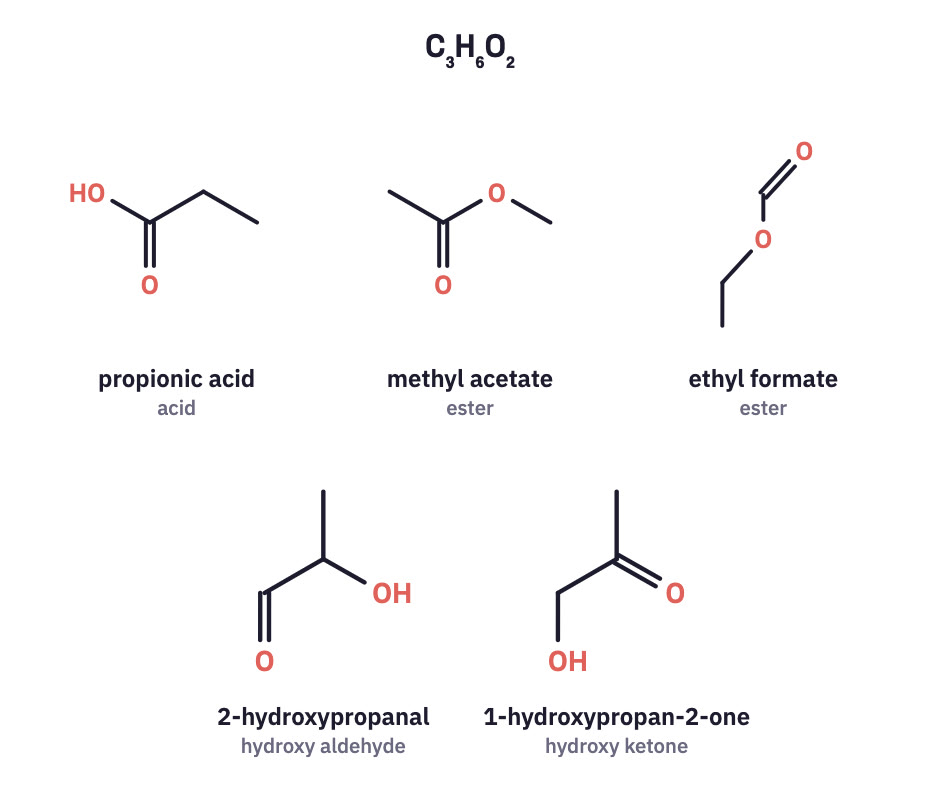
Acids, esters and hydroxy carbonyls
C₃H₆O₂: propionic acid, methyl acetate, ethyl formate, and the often-forgotten hydroxy carbonyls 2-hydroxypropanal and 1-hydroxypropan-2-one.
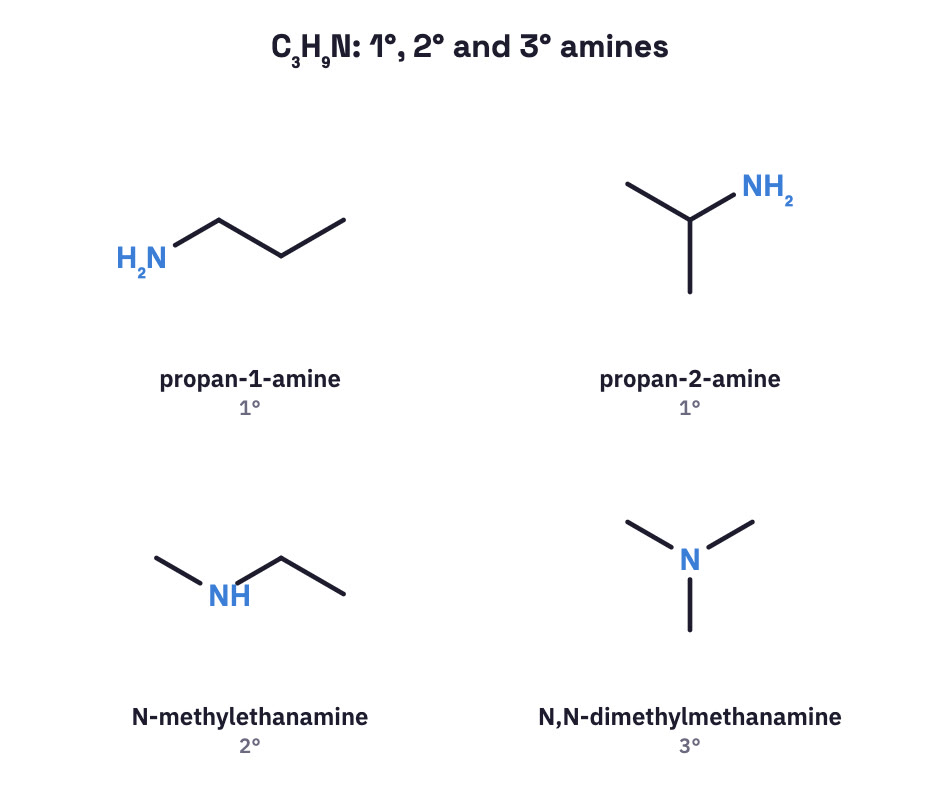
1°, 2° and 3° amines
C₃H₉N: propan-1-amine and propan-2-amine (1°), N-methylethanamine (2°), N,N-dimethylmethanamine (3°). Amines of different degree are functional isomers. Also: CH₃CN / CH₃NC, C₂H₅NO₂ / C₂H₅ONO, acetaldoxime / acetamide, ethanethiol / dimethyl sulphide.
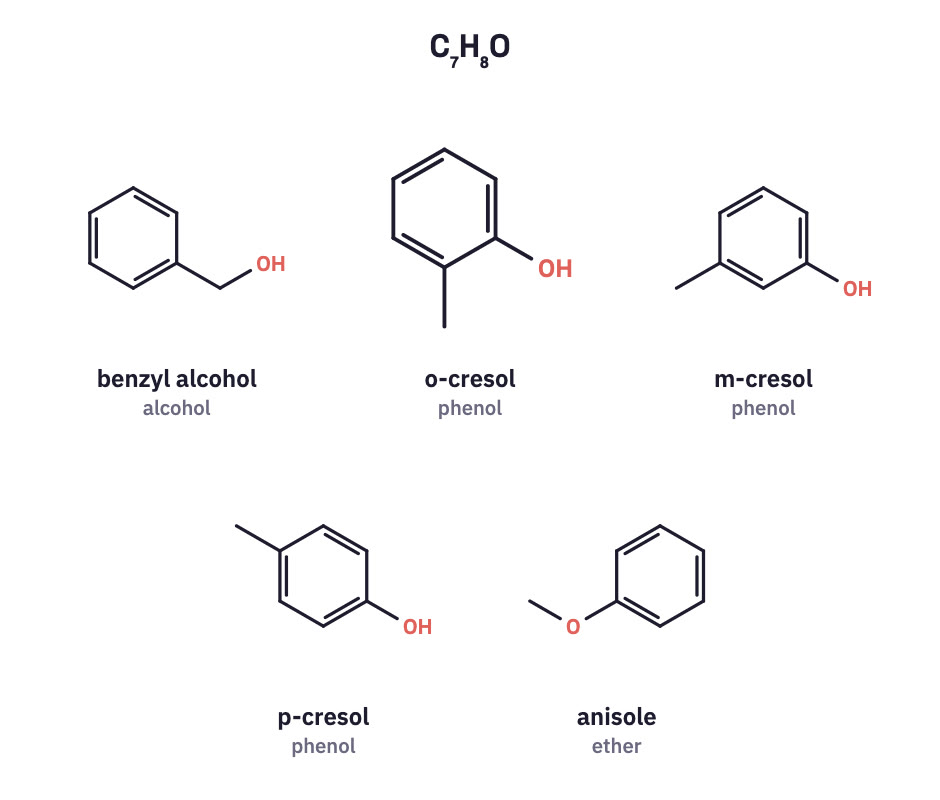
C₇H₈O
Benzyl alcohol (an alcohol), o-, m- and p-cresol (phenols) and anisole (an ether). The three cresols are position isomers of each other.
Your turn
Which pair are NOT functional isomers?
Show the answer and the traps
Both are primary amines; only the NH₂ moves. They're position isomers: option (d).
Cyanide and isocyanide, aldehyde and ketone, alcohol and ether: each of those pairs changes the functional group.
Common mistakes
Try these
1. Give two isomers of C₃H₆O that are not carbonyl compounds.
Any two of allyl alcohol, methyl vinyl ether, oxetane, 1,2-epoxypropane, cyclopropanol.
2. Ethyl acetate is C₄H₈O₂. Name a functional isomer from a different class.
Butanoic acid (or 2-methylpropanoic acid): a carboxylic acid.
3. Are nitroethane and ethyl nitrite functional isomers?
Yes: a nitroalkane (bonded through N) and an alkyl nitrite (bonded through O).