 layrd.liveLayer by Layer
- 1. Isomer Basics
- 2. Functional
- 3. Metamerism
- 4. Keto-Enol
- 5. Other Tautomers
- 6. D.B.E. & Counting
- 7. Geometrical
- 8. Chirality
- 9. No Chiral Carbon
- 10. Counting Stereoisomers
- 11. Racemates & ee
- 12. Fischer & D/L
- 13. Alkane Conformations
- 14. Cyclohexane
Conformations of Cyclohexane
Baeyer assumed flat rings and predicted strain; real cyclohexane puckers into a strain-free chair. This part covers the chair and boat, axial and equatorial positions, and which chair a substituted cyclohexane prefers.
Builds on: Part 13 · Conformations of Ethane, Propane and Butane.
 Video coming soon
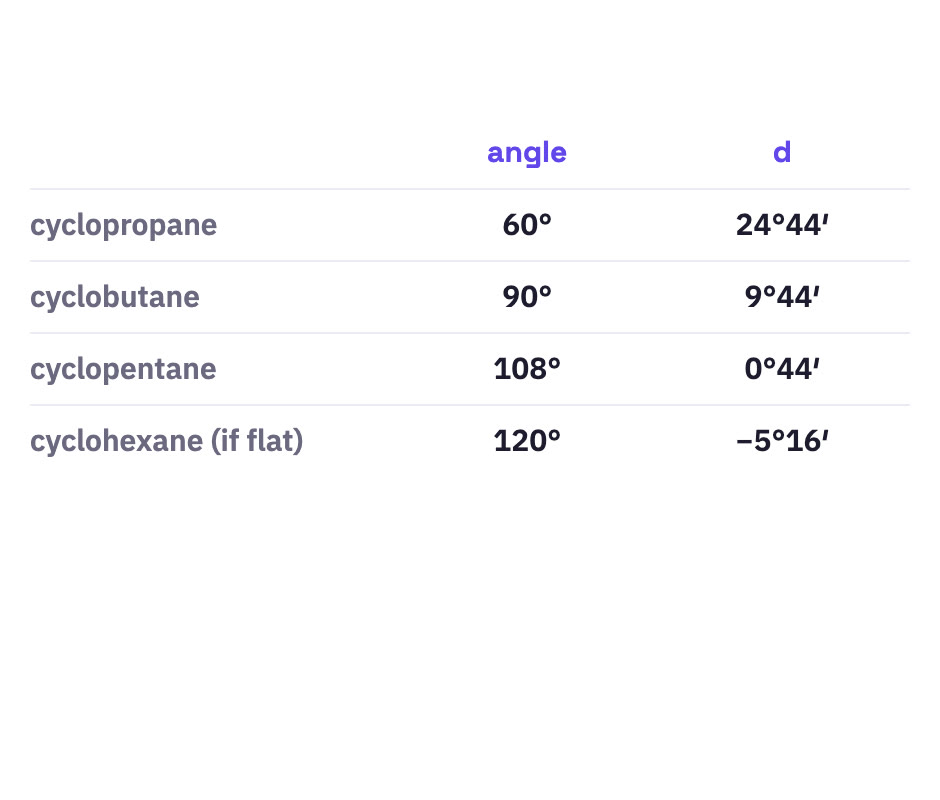
Cyclopropane 24°44′ (most strained, most reactive), cyclobutane 9°44′, cyclopentane 0°44′, cyclohexane −5°16′ if flat. Cyclohexane isn't flat, so it is strain-free.
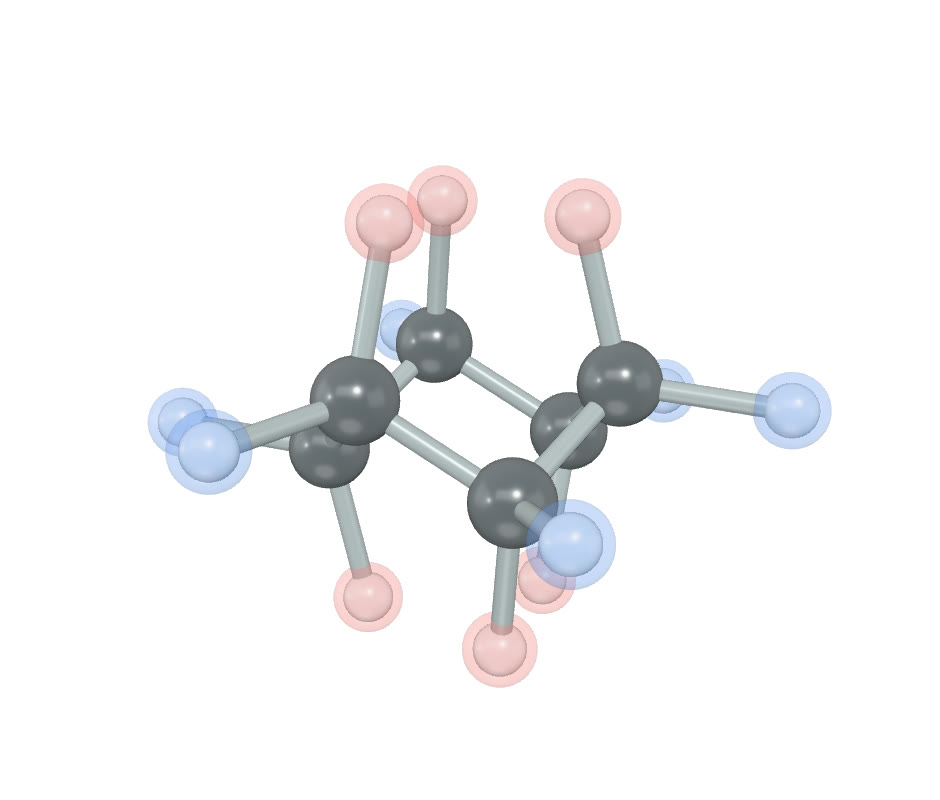
6 axial, 6 equatorial
In the chair every C–C bond is staggered. Axial bonds point straight up or down; equatorial bonds point around the ring. A ring flip swaps them.
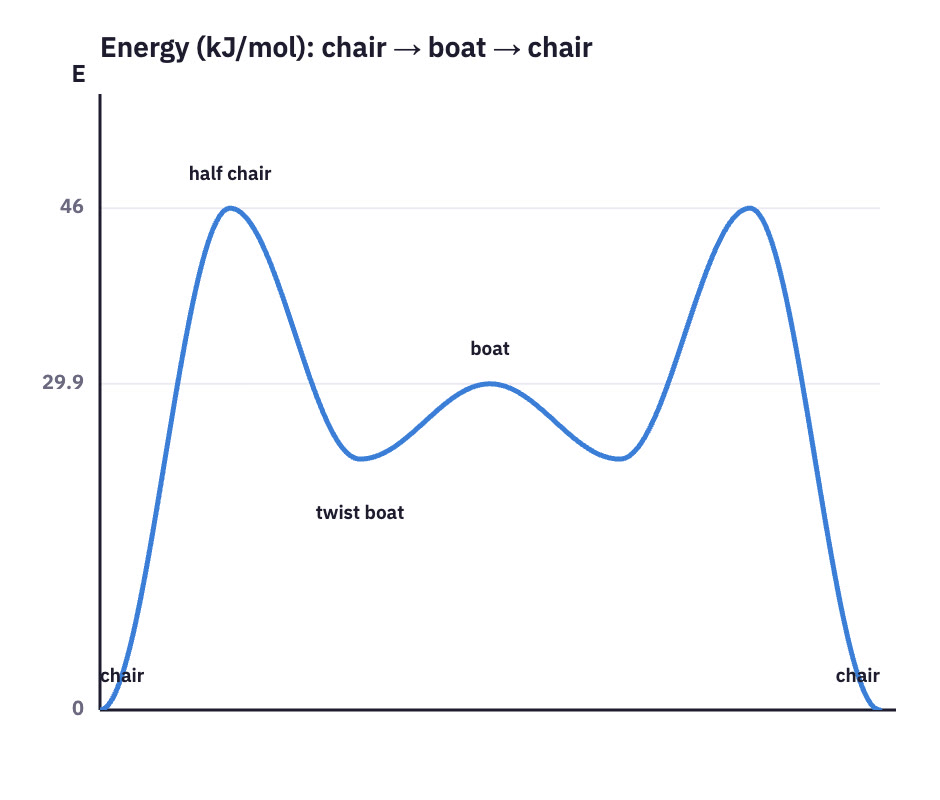
Chair → boat → chair
The boat is ≈ 29.9 kJ/mol above the chair (eclipsed bonds, flagpole H 1.83 Å apart); the barrier is 37.7–46.0 kJ/mol. Stability: chair > twist boat > boat > half chair.
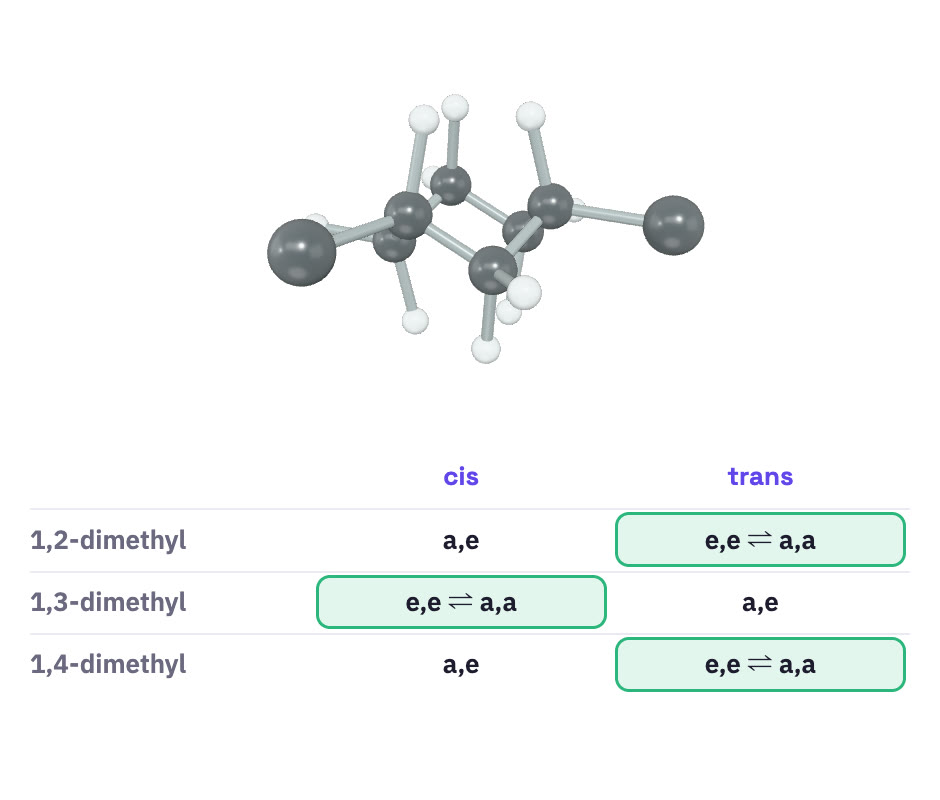
Can both be equatorial?
1,2: trans e,e · 1,3: cis e,e · 1,4: trans e,e. The diequatorial isomer is the stable one, so for 1,3 it is cis.
Key formulas
Your turn
The most stable form of 1,3-dimethylcyclohexane:
Show the answer and the traps
For 1,3, cis puts both methyls equatorial, with no 1,3-diaxial clashes. Option (a).
(b) can't exist: trans-1,3 is always a,e. (c) is cis in its worse chair. (d) always has one axial methyl.
Common mistakes
Try these
1. Which is more stable, cis- or trans-1,4-dimethylcyclohexane?
trans: it can be diequatorial.
2. Which ring has the greatest Baeyer angle strain?
Cyclopropane (d = 24°44′).
3. In the more stable chair of tert-butylcyclohexane, where is the tert-butyl group?
Equatorial; it is essentially never axial.