 layrd.liveLayer by Layer
Relations and Functions
Twenty connected videos that build the chapter layer by layer: relations first, then functions and their properties, then each family of functions, ending with periodicity, functional equations and graph transformations. Each part has a companion page with the key ideas, common mistakes and practice questions. The formula sheet, revision sheet and practice set cover the whole chapter.
Learning path · Formula sheet · Practice set
Print and revise: Revision sheet (PDF) · Formula sheet (PDF, one page)
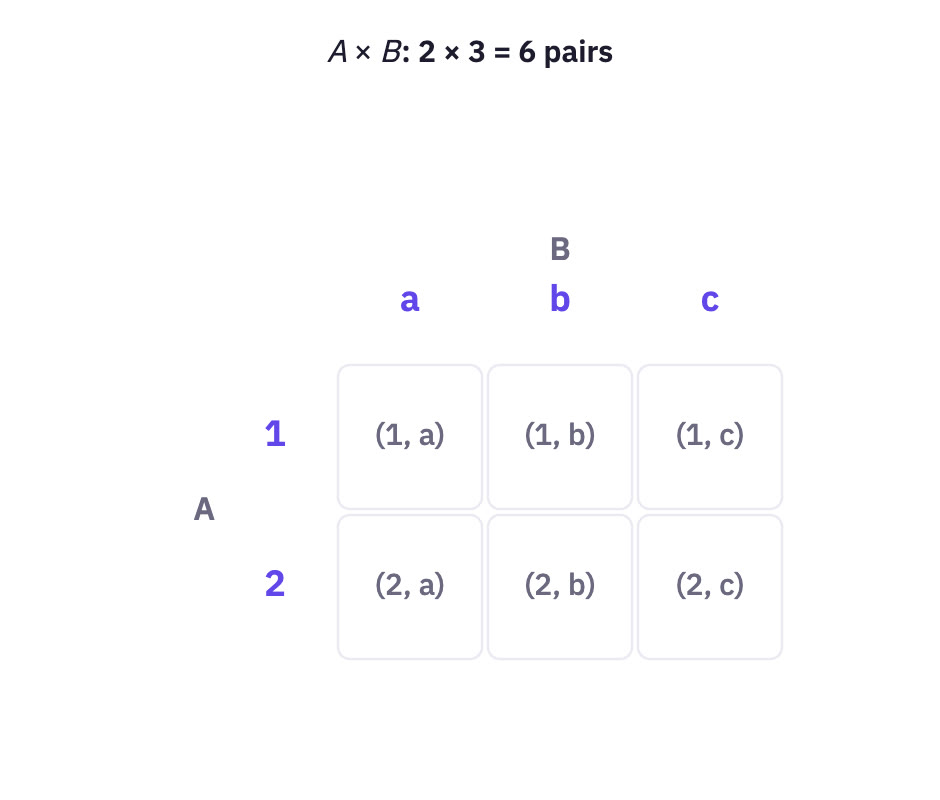
Relations: Definition, Domain and Range
Define a relation as any subset of A × B, write it in roster, set-builder and arrow-diagram form, and find its domain, range and codomain.
Cartesian product · Relation as a subset of A × B · Domain, range and codomain · Inverse and identity relations
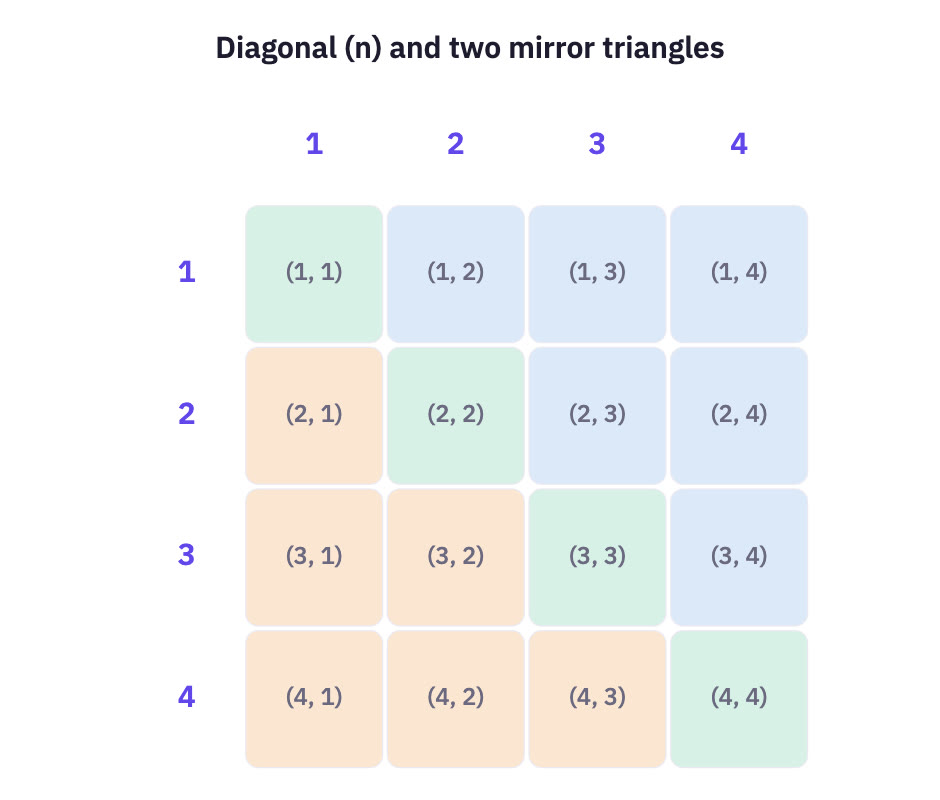
Reflexive, Symmetric and Transitive Relations
Test a relation for reflexivity, symmetry and transitivity, and count reflexive and symmetric relations with the A × A grid.
A × A grid picture · Reflexive relations (2^(n² − n)) · Symmetric relations (2^((n² + n)/2)) · Transitive relations
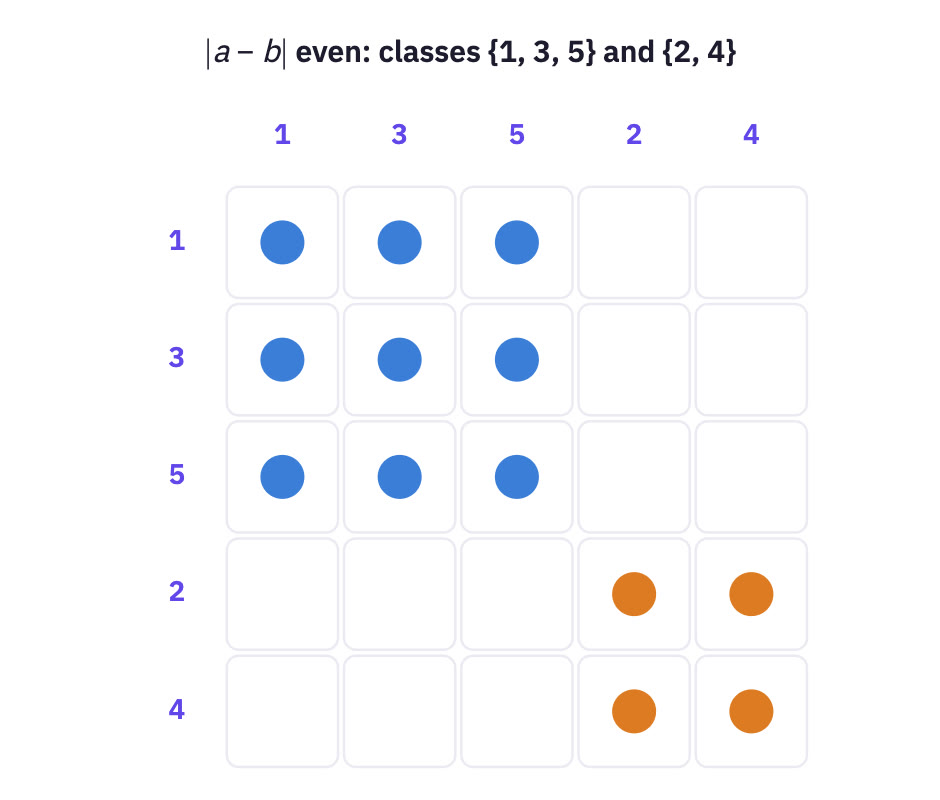
Equivalence Relations and Bell Numbers
Recognise equivalence relations, see them as partitions into classes, count them with Bell numbers, and find the fewest pairs to add for a property.
Equivalence relation · Equivalence classes and partitions · Bell numbers · Minimum pairs to add
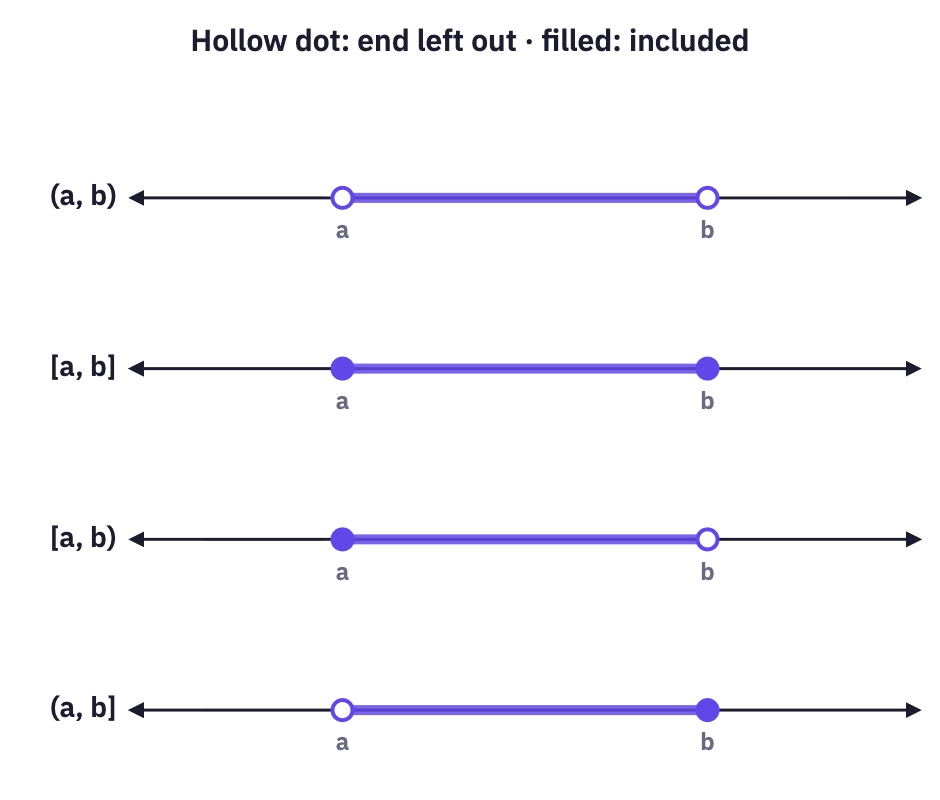
Functions: Definition, Intervals and Domain
Write intervals, recognise a function among relations, apply the vertical line test, and find domain, codomain and range, including piecewise rules.
Intervals · Function as a special relation · Vertical line test · Explicit, implicit, bounded and piecewise functions
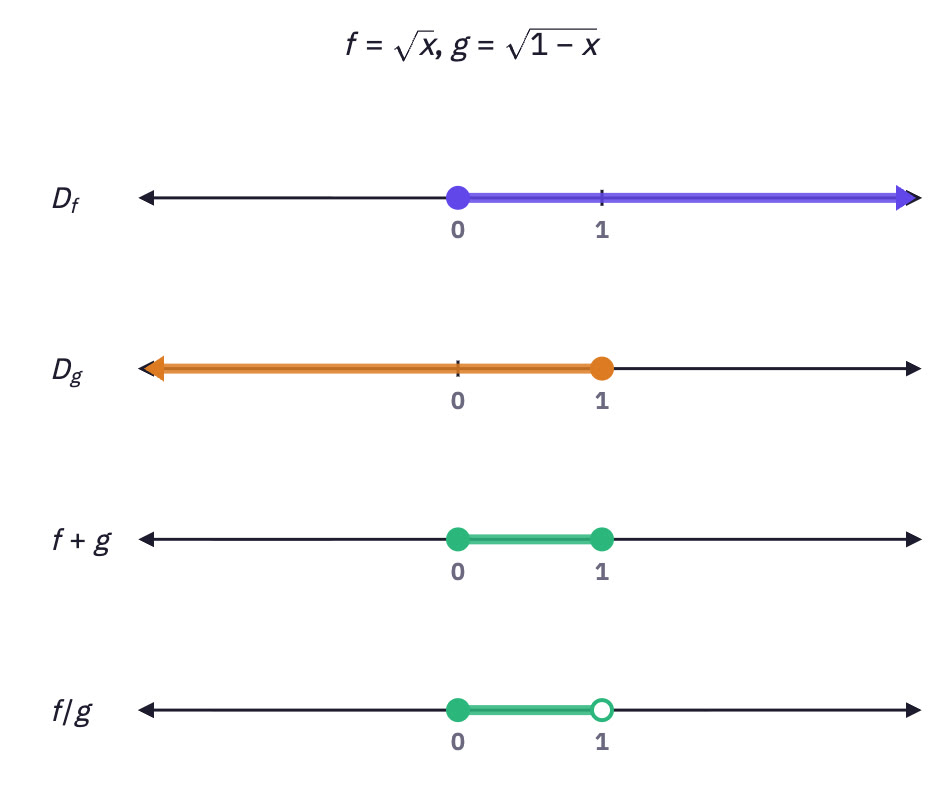
Algebra of Functions and Composite Functions
Add, subtract, multiply, divide and compose functions, and find the domain and range of a composite of piecewise functions case by case.
Domain of f ± g, fg, f/g · Composite functions · Composite of piecewise functions
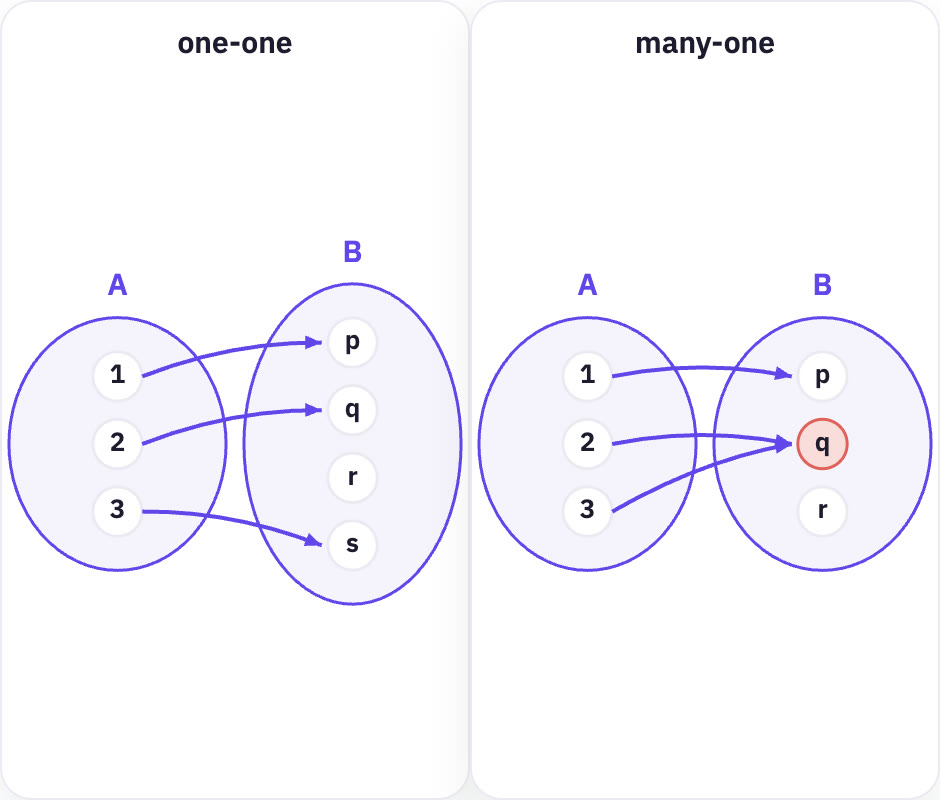
One-One, Many-One, Onto and Into Functions
Test whether a function is one-one or many-one, onto or into, algebraically and with the horizontal line test.
One-one (injective) · Many-one · Onto (surjective) and into · Horizontal line test
![Graph inside the square [−1, 1] × [−1, 1].](../07-bijections-and-composites/page/images/sine.jpg)
Bijections, Counting Functions and Composites
Recognise bijections, count functions, one-one and onto maps between finite sets, and know which properties pass through gof.
Bijective functions · Counting functions, injections and surjections · Injectivity and surjectivity of gof
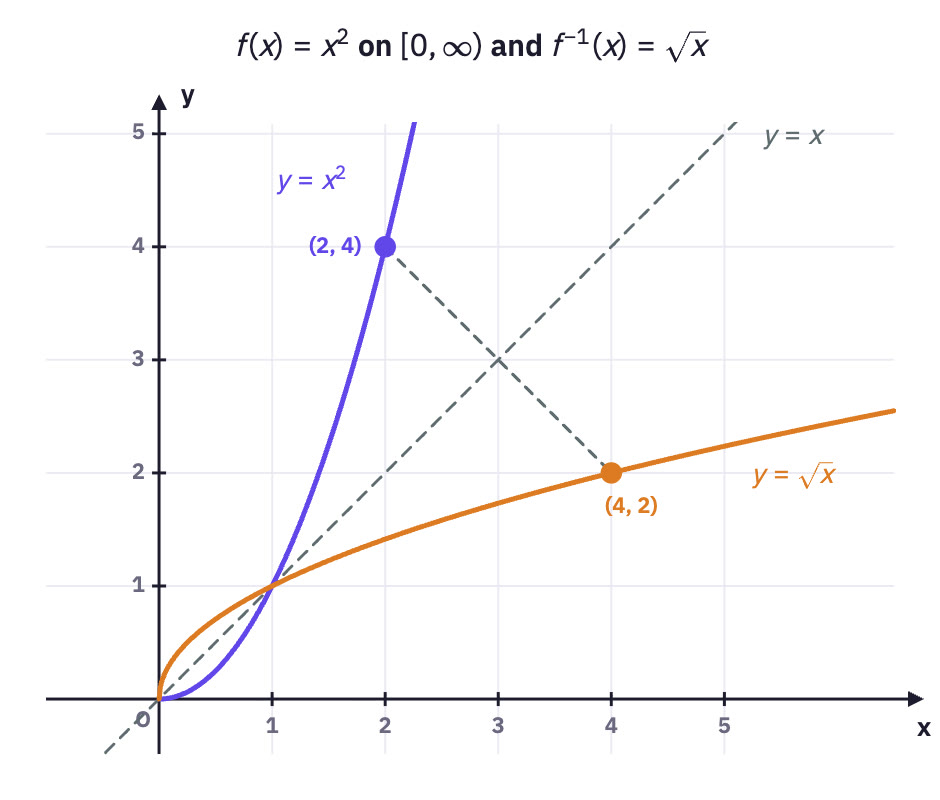
Inverse Functions
Decide when an inverse exists, find it (including restricted and piecewise cases), and use the composition rules for inverses.
Existence of the inverse · Graph of f⁻¹ as a mirror in y = x · Finding inverses · (gof)⁻¹ = f⁻¹og⁻¹
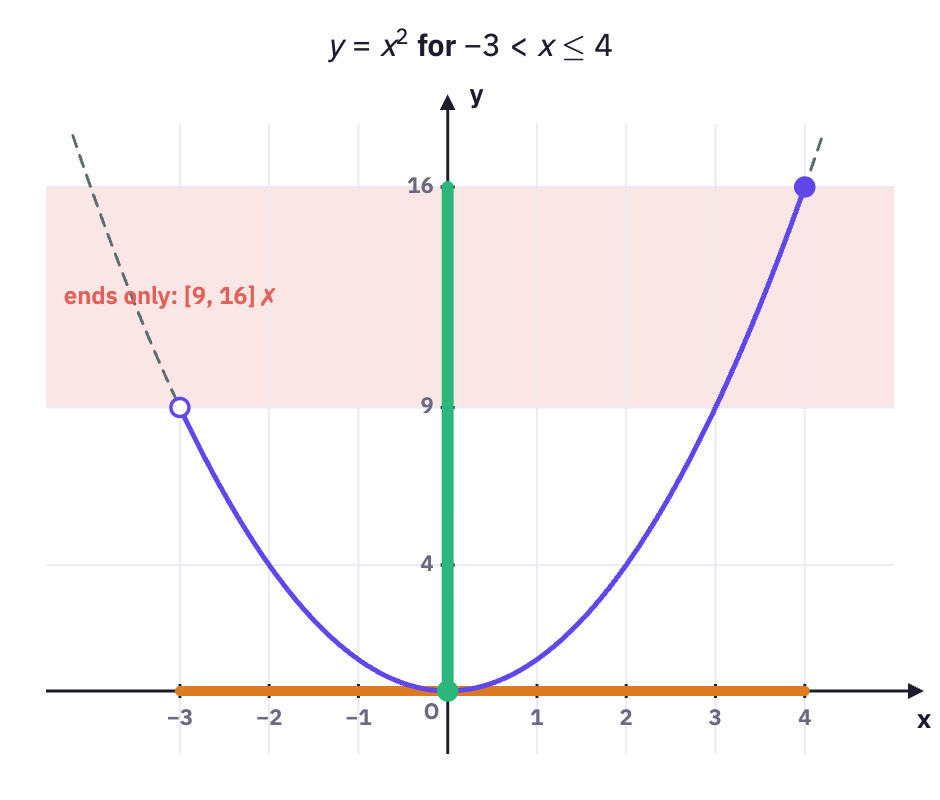
Inequalities and the Wavy Curve Method
Square and invert ranges safely, and solve rational inequalities with the sign scheme (wavy curve) method.
Properties of inequalities · Squares and reciprocals of ranges · Sign scheme (wavy curve) method
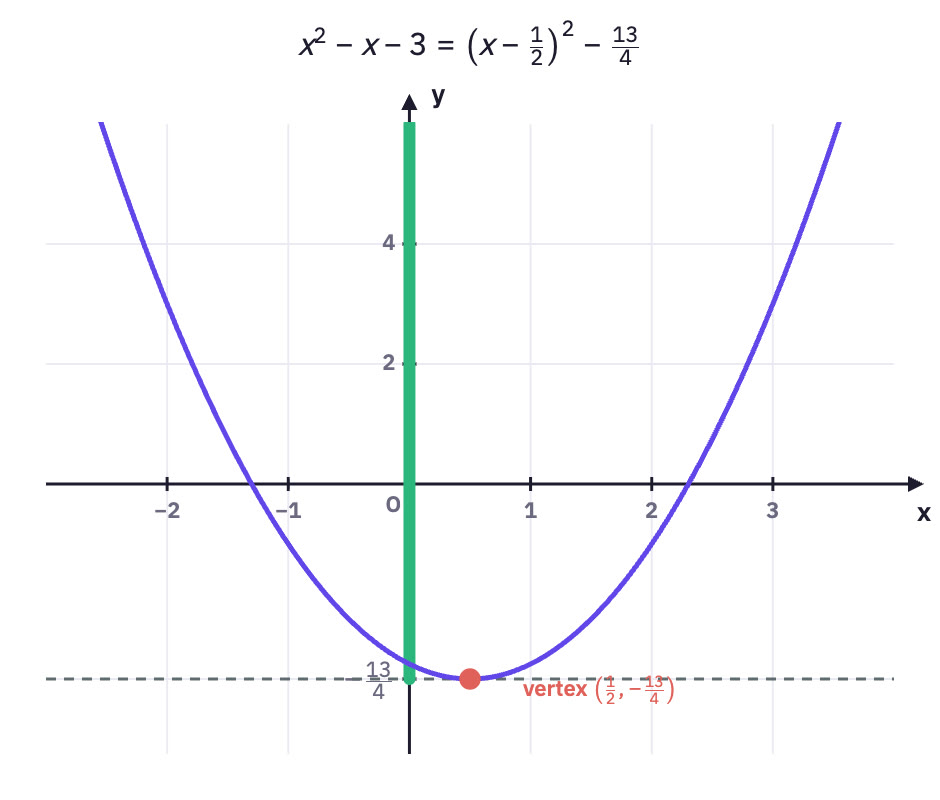
Domain and Range of Algebraic Functions
Find the domain and range of radical and rational functions by completing the square, using bounds and the discriminant method.
Range by completing the square · Discriminant method · Quadratic function and its graph
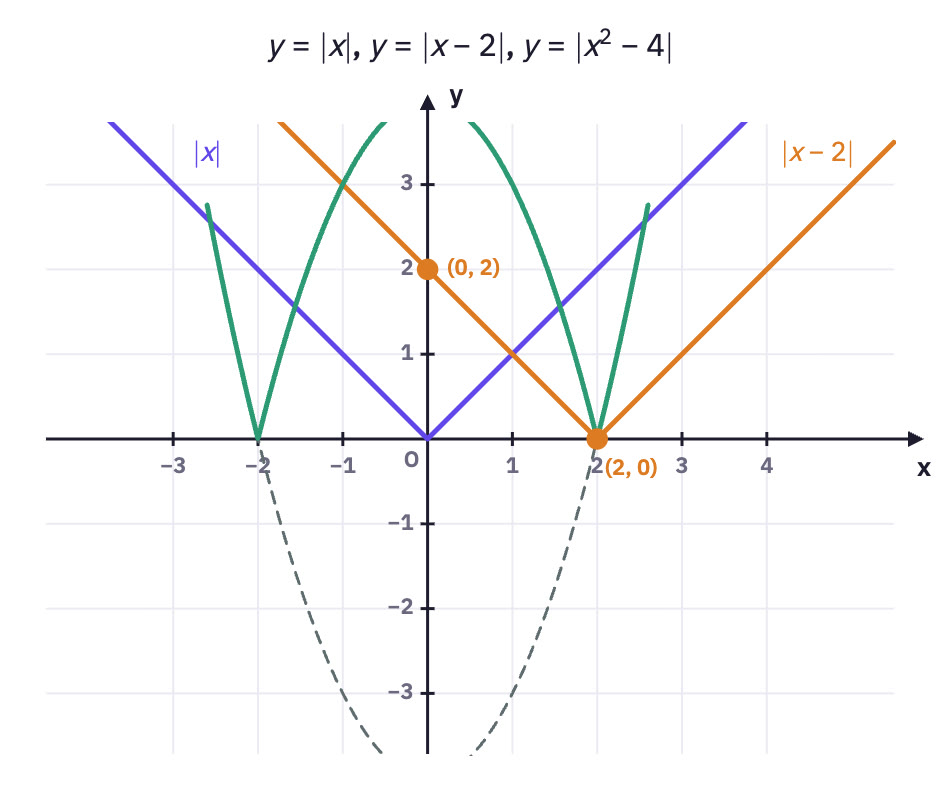
Modulus Function
Read |x| as distance, draw V-graphs, use the properties of modulus, and find ranges of expressions with modulus.
|x| as distance · Graph of |x − a| · Properties of modulus
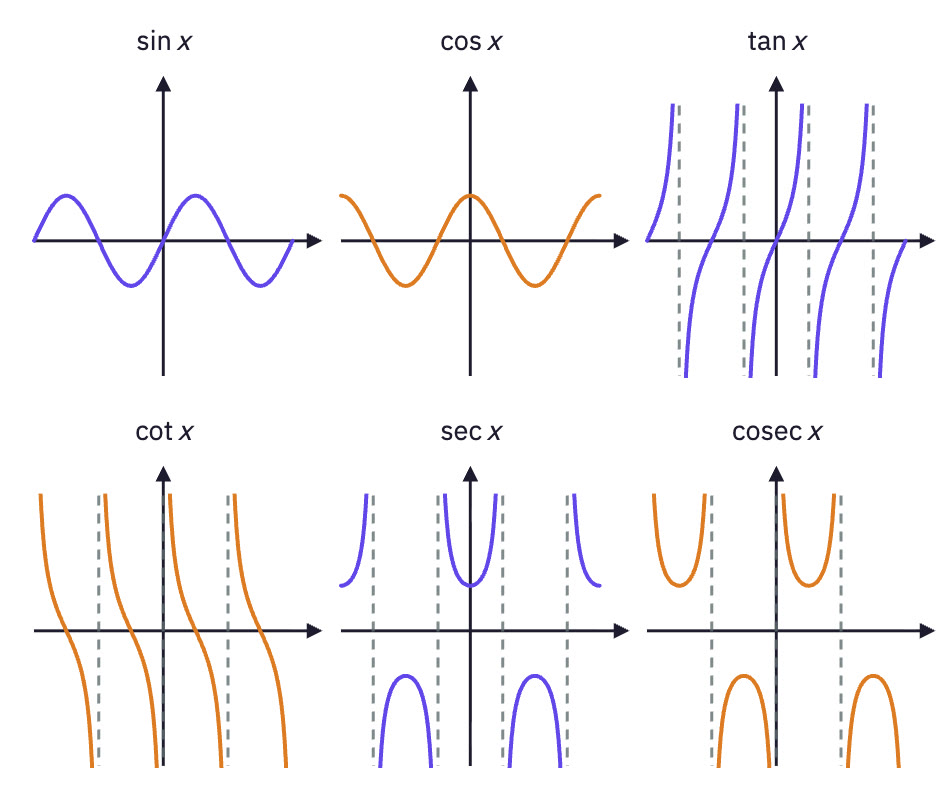
Trigonometric Functions: Graphs and Ranges
Know the domain, range, period and parity of all six trigonometric functions from their graphs, and the range of a cos x + b sin x.
Graphs of the six trig functions · Domain, range, period, parity · General solutions · Range of a cos x + b sin x
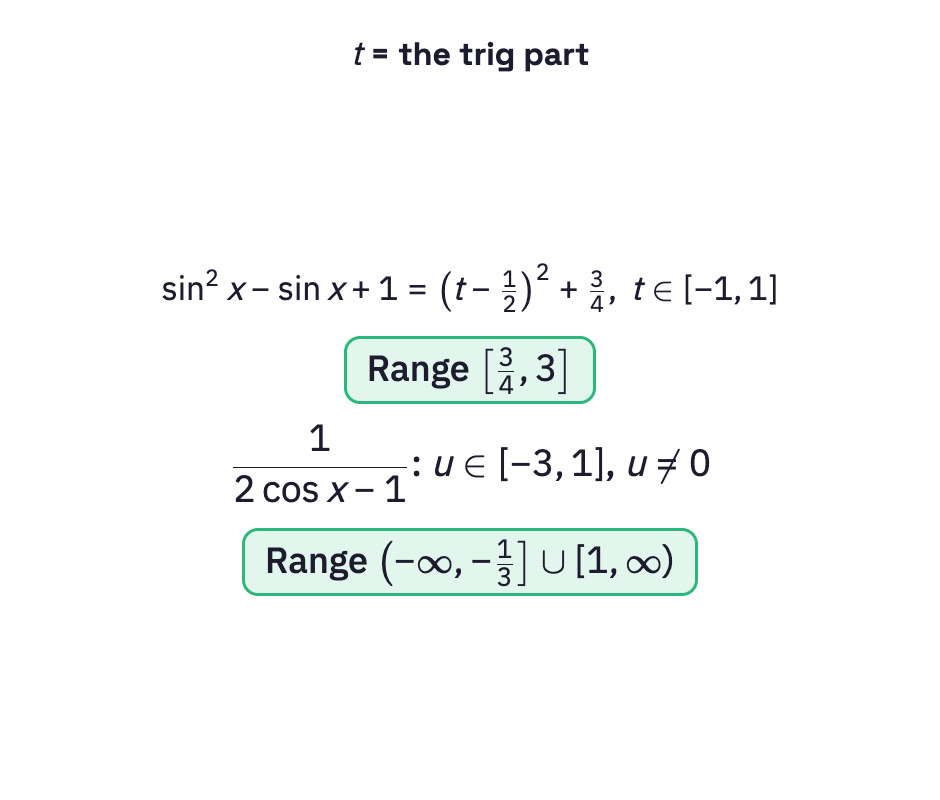
Domain and Range of Trigonometric Expressions
Find the domains and ranges of trigonometric expressions and count solutions with graphs, the way JEE asks them.
Domain of trig expressions · Range by substitution t = sin x · Counting solutions graphically
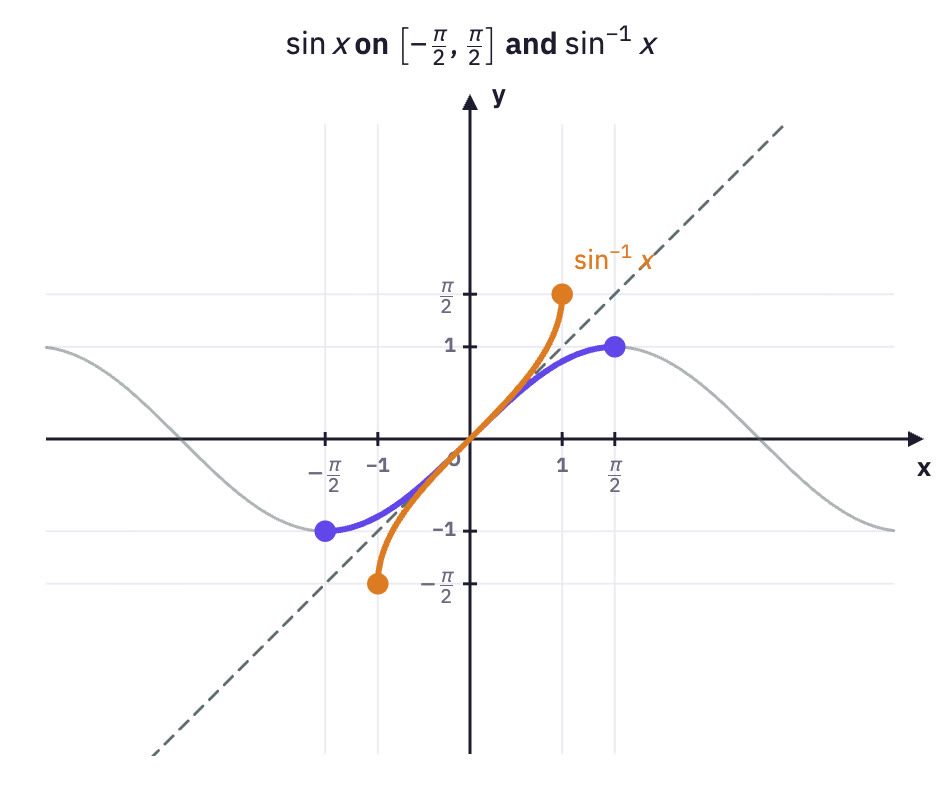
Inverse Trigonometric Functions
Know the principal domains, ranges and graphs of the six inverse trig functions and the identities JEE uses.
Principal value branches · Graphs of inverse trig functions · sin⁻¹x + cos⁻¹x = π/2 and related identities · sin⁻¹(sin x)
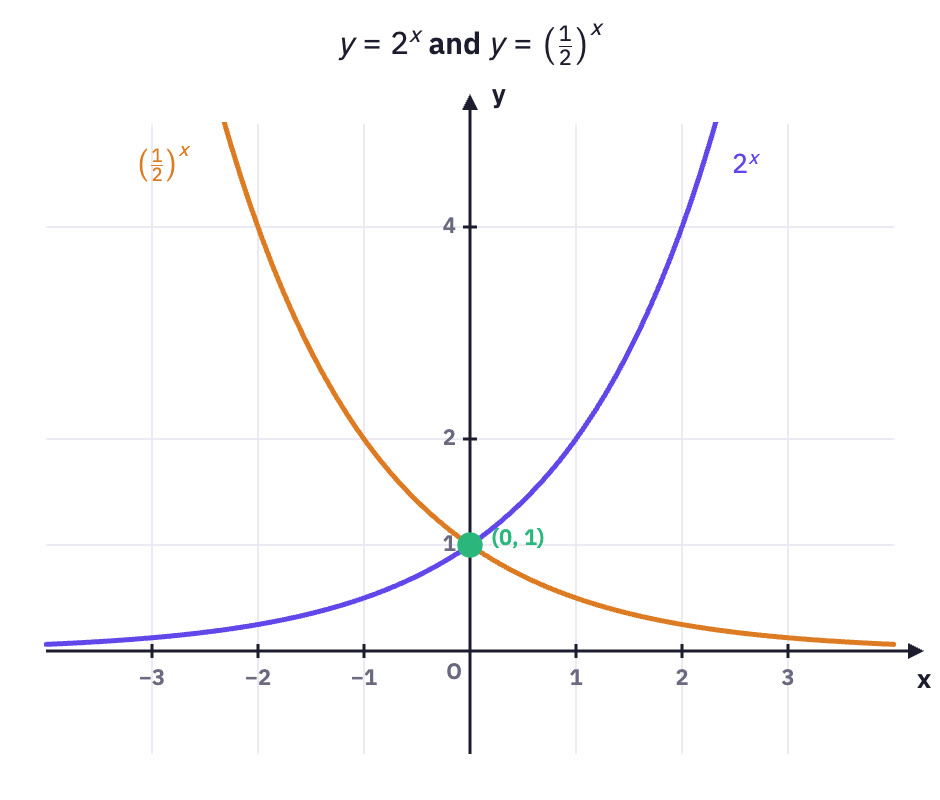
Exponential and Logarithmic Functions
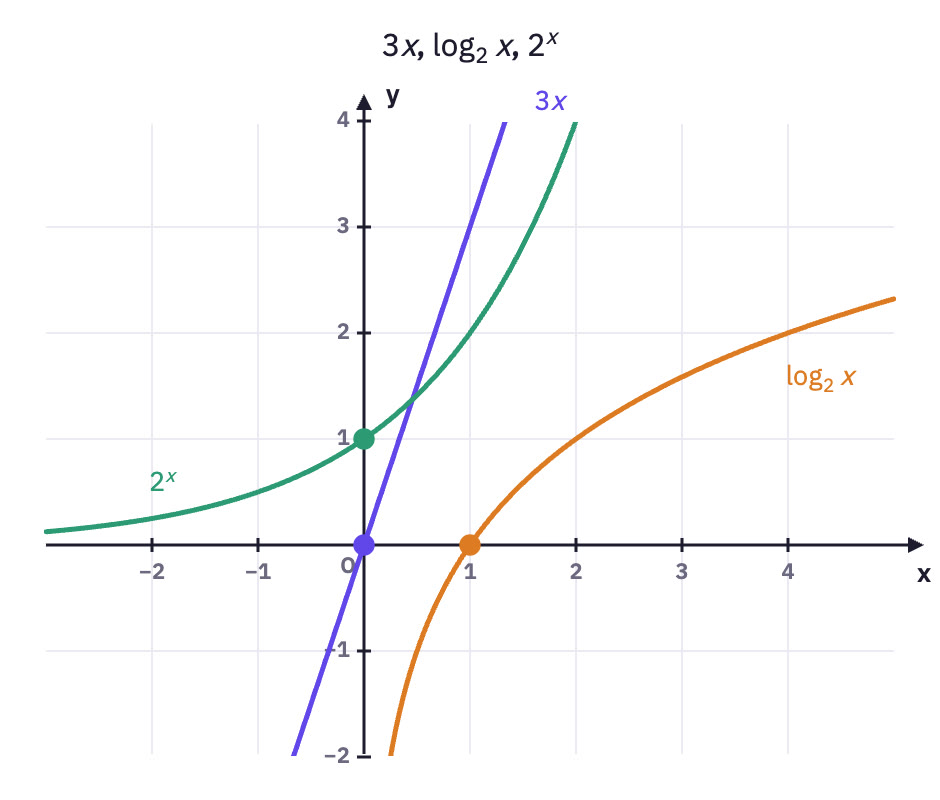
Use the graphs, domains and ranges of aˣ and logₐx, including bases between 0 and 1, to solve domain and range problems.
Exponential functions · Logarithmic functions · Log inequalities and base conditions
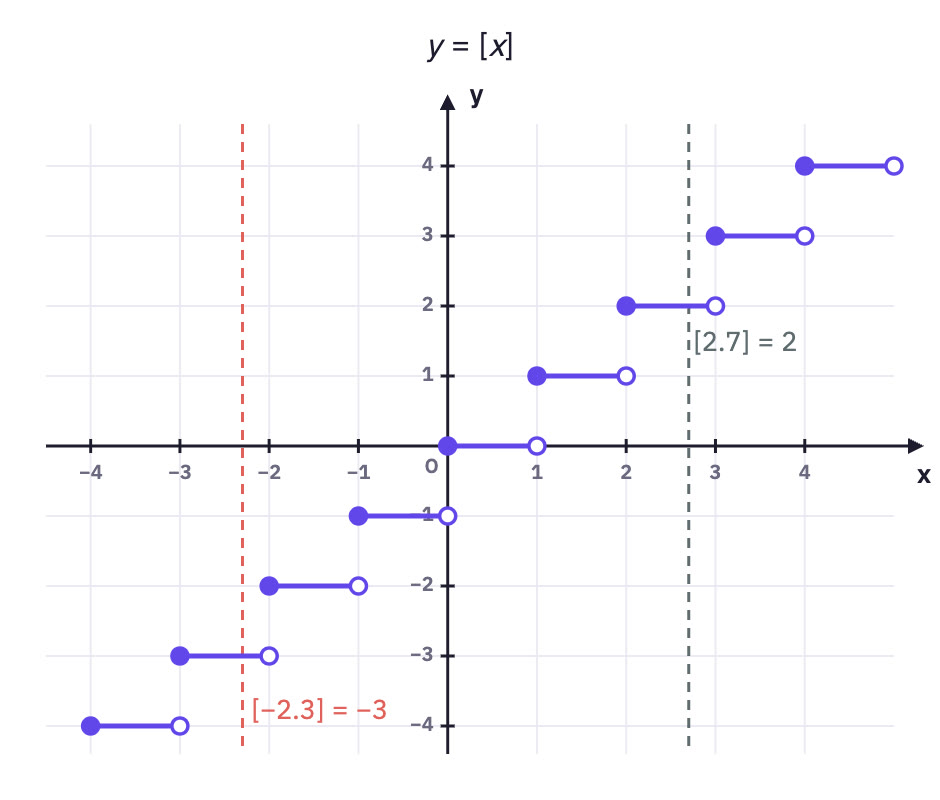
Greatest Integer, Fractional Part, Signum and Max-Min
Work with [x], {x}, sgn(x) and max/min of functions: graphs, properties, equations and domain–range problems.
Greatest integer function · Fractional part function · Signum function · Max and min of functions
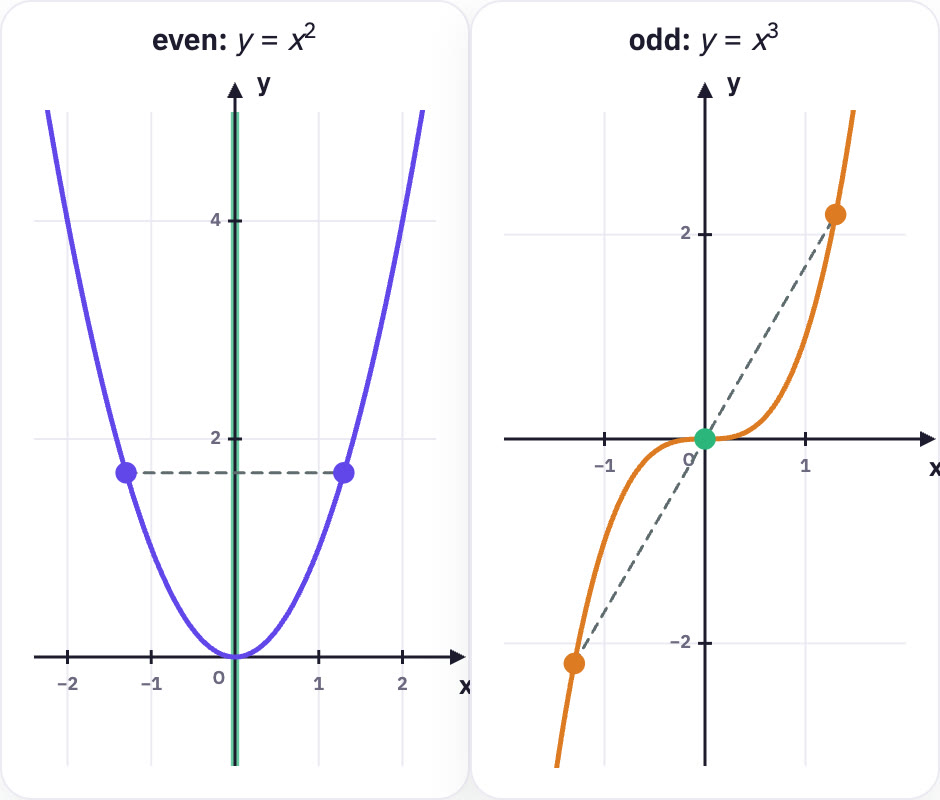
Even and Odd Functions
Test parity, split any function into even and odd parts, and build even and odd extensions.
Even and odd functions · Parity of sums, products and composites · Even and odd parts · Even and odd extensions
Periodic Functions
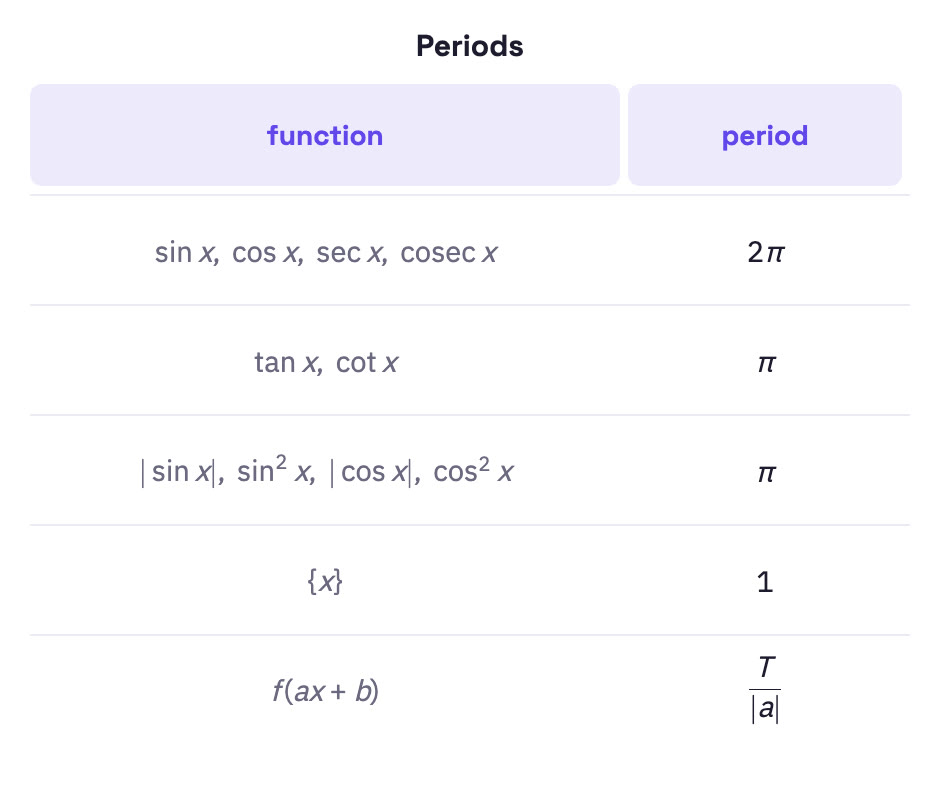
Find the fundamental period of transformed, composite and combined functions, including the cases where the LCM rule fails.
Fundamental period · Period of f(ax + b) · LCM of periods and its exceptions
Functional Equations
Solve standard functional equations by substitution and by recognising the underlying function.
Substitution method · f(x + y) = f(x) + f(y) · f(xy) = f(x) + f(y) · f(x + y) = f(x) f(y)
Transformation of Graphs
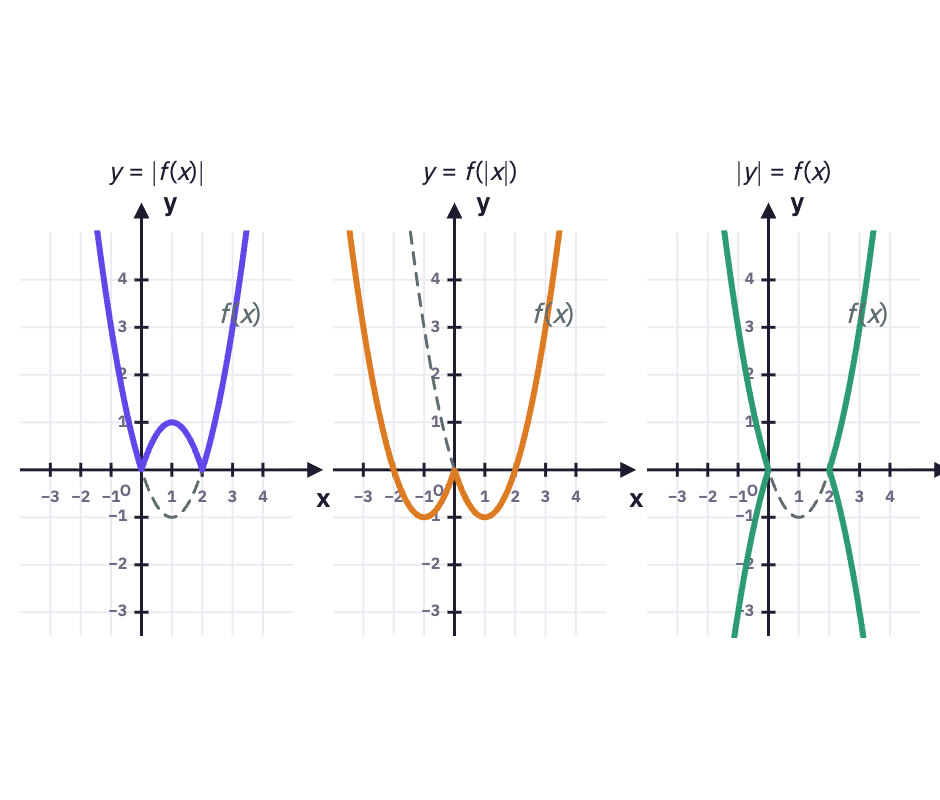
Sketch a graph after shifts, stretches, reflections, modulus and greatest-integer transformations.
Shifts and stretches · Reflections · |f(x)|, f(|x|) and |y| = f(x) · [f(x)] and f([x])